




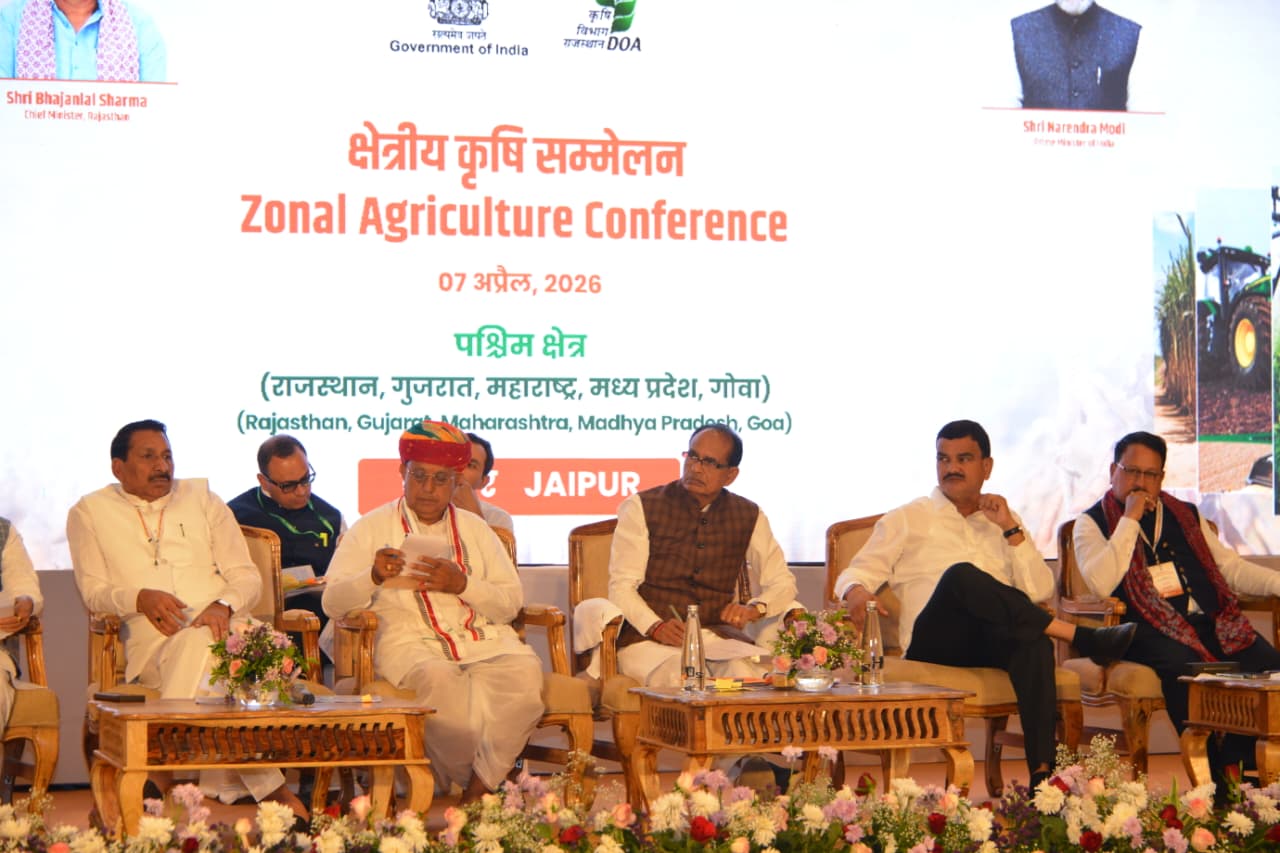
By linking farmers with a unique ‘Farmer ID’, the systems for fertilizers, seeds, insurance, and compensation will be rendered completely transparent and targeted — Union Agriculture Minister Shivraj Singh Chouhan
Through the ‘Viksit Krishi Sankalp Abhiyan’ (Developed Agriculture Pledge Campaign), 16,000 scientists will directly deliver technology to farmers using the “Lab-to-Land” model
The ‘Global Rajasthan Agritech Meet’ is being organized in May to provide farmers in Rajasthan with information regarding new agricultural technologies — Bhajanlal Sharma
Every possible effort will be undertaken to empower the state’s farmers and enhance agricultural productivity — Chief Minister Bhajanlal Sharma
The State View | Sunil Sharma
Jaipur: Union Minister for Agriculture & Farmers Welfare and Rural Development, Shivraj Singh Chouhan, stated today—following a regional agriculture conference held in Jaipur—that the entire country will now be demarcated into various agro-climatic zones to formulate a distinct agricultural roadmap for each state. Furthermore, by linking all farmers with a unique ‘Farmer ID’, the entire ecosystem encompassing fertilizers, seeds, crop insurance, and compensation distribution will be made fully transparent and targeted. Building upon the record production of 429.89 lakh tonnes achieved in 2024–25 under the National Mission on Edible Oils–Oilseeds (NMEO-OS)—along with the accompanying increase in productivity—a target has been set to expand the area under oilseed cultivation from 29 million hectares to 33 million hectares, and to boost production from 39.2 million tonnes to 69.7 million tonnes. Simultaneously, under the Pulses Mission, the country will be steered toward robust self-reliance in pulses through initiatives such as enhanced seed production, the establishment of pulse mills, the introduction of new seed varieties into the seed chain, and a commitment to 100% procurement from willing farmers.
State-wise Agricultural Roadmaps and Regional Conferences

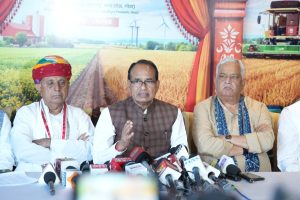
During a press conference, Union Agriculture Minister Shivraj Singh Chouhan stated that this marks the country’s first-ever regional conference—an event where senior scientists from the ICAR, agricultural experts, progressive farmers, FPOs, NAFED, NCCF, and all institutions involved in the entire “seed-to-market” value chain have converged on a single platform. Previously, only a single national-level conference was held for the Kharif and Rabi seasons; however, due to time constraints, detailed discussions were often not possible. He announced that the country will now be divided into five agro-climatic zones, within which five regional conferences will be organized. Based on each state’s specific climate, soil conditions, water availability, and available resources, a distinct agricultural roadmap will be formulated. This framework will determine—for each specific region—which crops, crop varieties, and agricultural practices are best suited for optimal results.
*Farmer ID: The Backbone of Fertilizers, Seeds, Insurance, and Compensation*
The Union Agriculture Minister informed the media that the process of generating ‘Farmer IDs’ is proceeding at a rapid pace across all states. He expressed confidence that a unified digital identity for every farmer would be established within approximately three months, thereby enabling farmers to receive the benefits of every government scheme directly and accurately. He further stated that the fertilizer distribution model currently being implemented in Madhya Pradesh—which is based on the Farmer ID system—will be replicated nationwide. Under this system, farmers will no longer be required to stand in queues; instead, they will receive the precise quantity of fertilizer required for their specific landholdings and crops. This initiative will effectively curb the circulation of counterfeit products and prevent black marketing. Furthermore, tenant farmers and sharecroppers will also be able to access fertilizers and other facilities through their Farmer IDs, subject to approval from the land-owning farmers. This very ID will subsequently serve as the foundational basis for accessing crop insurance, compensation for crop damage, and various other benefits.
*National Mission on Edible Oils–Oilseeds: Record Progress and Future Trajectory*
He highlighted that under the National Mission on Edible Oils–Oilseeds, the production of oilseeds reached a record high of 429.89 lakh tonnes during the 2024–25 period—a significant increase from the 396.69 lakh tonnes recorded in 2023–24. He stated that productivity has risen from 1,314 kilograms per hectare in 2023–24 to 1,412 kilograms per hectare in 2024–25—a significant achievement for farmers—conveying the message that, through the right policies, seeds, technology, and incentives, the country is rapidly advancing toward self-reliance in oilseeds.
The Union Agriculture Minister further informed that in 2025–26, an additional 1.335 million hectares of land have been brought under oilseed cultivation through 1,076 value chain clusters. Furthermore, 60 seed centers have been established, 50 seed storage units have been approved, and 400 oil mills have already been set up—against a total target of establishing 800 oil mills—with the aim of strengthening the entire value chain, from production to processing and marketing.
*Targets for Self-Reliance in Oilseeds: Area, Productivity, and Production*
Union Agriculture Minister Shivraj Singh Chouhan stated that a provision of ₹10,103 crore has been made to achieve self-reliance in oilseeds, ensuring that farmers receive comprehensive support across the fields of technology, seeds, irrigation, processing, and marketing. He explained that the objective is to expand the area under oilseed cultivation from 29 million hectares to 33 million hectares, boost productivity from 1,353 kilograms per hectare to 2,112 kilograms per hectare, and increase total production from 39.2 million metric tonnes to 69.7 million metric tonnes. This initiative aims to bring about a decisive reduction in dependence on imports for edible oils while ensuring that farmers earn higher incomes from high-value crops.
*Pulses Mission: Seeds, Dal Mills, New Varieties, and 100% Procurement*

He further informed that, under the Pulses Mission, all states have been directed to maximize seed production to ensure that farmers have access to adequate quantities of high-quality seeds for pulses. He announced that financial assistance per quintal will be provided to farmers to boost seed production for pulses such as *Arhar* (Pigeon Pea), *Urad* (Black Gram), and *Masoor* (Lentil). Specifically, assistance is being provided at the rate of ₹4,500 per quintal for *Tur* (Pigeon Pea), ₹2,000 per quintal for *Tur-Urad*, and ₹1,800 per quintal for *Chana* (Chickpea), with the aim of incentivizing farmers to produce quality seeds.
Union Agriculture Minister Shivraj Singh Chouhan also noted that state-wise targets have been established for the distribution of subsidized seeds to farmers. The targets for pulses seed distribution are set at 310,870 quintals for Madhya Pradesh, 245,000 quintals for Rajasthan, 87,500 quintals for Maharashtra, and 40,000 quintals for Gujarat. He emphasized that special priority has been accorded to rapidly integrating new pulse varieties into the seed supply chain; efforts are currently underway to identify and utilize 79 new pulse varieties in Rajasthan, 58 in Gujarat, 63 in Madhya Pradesh, and 58 in Maharashtra.
*Pulses Production Hotspots, Network of Dal Mills, and Financial Provisions for States*
He stated that, in terms of pulses production, Madhya Pradesh, Maharashtra, Rajasthan, and Gujarat collectively contribute over 60 percent of the country’s total output. Furthermore, several districts within these states—such as Narmadapuram in Madhya Pradesh, Jhalawar and Tonk in Rajasthan, Gadchiroli in Maharashtra, and Junagadh in Gujarat—are demonstrating excellent performance and are slated to be developed as “Model Districts.” He added that districts where pulses production is relatively low will undergo a comprehensive review, and special schemes will be formulated to boost their productivity.
Union Agriculture Minister Chauhan announced that an extensive network of *dal* (pulses) mills is being established to accelerate pulses processing. Targets have been set to establish 55 mills in Madhya Pradesh, 34 in Maharashtra, 28 in Gujarat, 30 in Rajasthan, and 5 in Goa, thereby ensuring that processing and value addition proceed alongside production. He further stated that for the year 2026–27, funds amounting to ₹344 crore for Madhya Pradesh, ₹312 crore for Rajasthan, ₹166 crore for Maharashtra, and ₹31 crore for Gujarat will be made available under the Pulses Mission. Additionally, a provision has been instituted to procure 100 percent of the produce—specifically pulses such as *Tur*, *Urad*, and *Masoor*—from interested farmers at the Minimum Support Price (MSP), thereby assuring farmers of the same level of complete security in pulses cultivation as they currently enjoy with wheat and rice.
*Viksit Krishi Sankalp, Integrated & Natural Farming, and Strict Action Against Adulterated Fertilizers*
He informed that the *Viksit Krishi Sankalp* (Developed Agriculture Pledge) campaign will now be implemented in accordance with the specific agro-climatic conditions and crop cycles of each state. Approximately 16,000 scientists, along with institutions under the ICAR, agricultural universities, and Krishi Vigyan Kendras (Agricultural Science Centers), will engage directly with farmers to work on the principle of “Lab to Land.” He stated that to boost income on small landholdings, an Integrated Farming Model—combining grains with fruits, flowers, vegetables, medicinal crops, animal husbandry, beekeeping, fish farming, goat rearing, and agro-forestry—will be promoted. Furthermore, a consensus was reached on rapidly advancing towards natural farming, safeguarding soil health, and securing premium market access for farmers through organic certification.
The Union Agriculture Minister noted that major campaigns have previously been launched against counterfeit fertilizers and pesticides, resulting in the sealing of numerous factories; however, a tracking system is now being developed to monitor the entire supply chain, from the point of dispatch to the final delivery to the farmer. He pointed out that the outdated legislation of 1968 currently provides for only nominal penalties; consequently, extensive deliberations are underway to enact stricter laws against counterfeit seeds, fertilizers, and pesticides. Steps will be taken—through amendments or new legislation introduced in the upcoming parliamentary session—to ensure that offenders face severe punishment.
*Crop Damage, Impact of War, APT (Potatoes, Onions, Tomatoes), and Flexible Funding*
Union Minister Shivraj Singh Chouhan explained that, in instances of crop loss due to natural calamities, work is underway to conduct a scientific assessment of the damage using satellite-based remote sensing technology. This initiative aims to enable state governments to accurately assess the damage and provide relief through the SDRF (State Disaster Response Fund) under the provisions of RBC 6(4), while simultaneously ensuring that insurance payouts reach farmers in record time—based on their unique Farmer IDs—through the Pradhan Mantri Fasal Bima Yojana (Prime Minister’s Crop Insurance Scheme). He further stated that global crises, such as the Russia-Ukraine war, inevitably impact fertilizer supplies and agricultural inputs; however, under the leadership of Prime Minister Narendra Modi, the government remains steadfastly committed to minimizing the adverse effects of such crises on India—and particularly on its farmers. He added that, currently, the country possesses adequate reserves of fertilizers to meet the requirements of both the Kharif and Rabi cropping seasons.
He explained that to prevent prices from falling due to excess production of crops like potatoes, onions, and tomatoes, forcing farmers to resort to distress sales, state governments will purchase directly from farmers through their institutions and supply them to major cities. The central government will bear the cost of transport and storage from village to city, ensuring fair prices for farmers and reasonable prices for consumers. He added that the central government will also ensure that each state receives flexibility in its schemes based on its needs. Those requiring drip irrigation will receive higher funding, while those requiring mechanization or processing will receive higher funding, ensuring resources are deployed where they are truly needed.
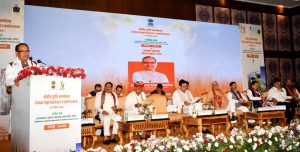
Chief Minister Bhajan Lal Sharma, addressing the regional zonal conference, said that Prime Minister Narendra Modi believes that farmers are the foundation of the country and that real development is possible only through villages, farms, and barns. He explained that the Prime Minister has taken a sensitive decision in the interest of farmers by increasing the PM Kisan Samman Nidhi. The state government has added an additional ₹3,000 to the amount, bringing it to ₹9,000, directly benefiting farmers.
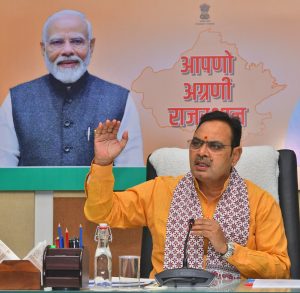
Chief Minister Bhajan Lal Sharma said that with the aim of making Rajasthan a leader in agricultural exports, the Global Rajasthan Agritech Meet 2026 will be held in May. Participation of agricultural experts, scientists, and technical specialists from India and abroad is being ensured in this important event. Various experts, including the Union Agriculture Minister, have been invited.
He expressed his gratitude to the Union Agriculture Minister for organizing the first Western Regional Conference in Rajasthan. The Chief Minister expressed confidence that the brainstorming at this conference will provide a new direction for the future of the agricultural sector.
The Chief Minister said that his government has accomplished more than the previous government. He said that during his government’s 25-month tenure, 35,368 farm ponds were built, while the previous government only built 8,152 farm ponds in the first 25 months. Similarly, during our 25-month tenure, we provided farmers with a subsidy of ₹303 crore for farm ponds, while the previous government provided farmers with a subsidy of ₹48 crore for farm ponds alone during that period. Similarly, our government has accomplished many times more than the previous government in various agricultural areas, including fencing, shade net houses, distribution of ownership cards, construction of ponds, and assistance to cow shelters.
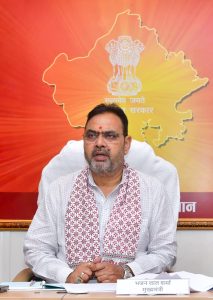
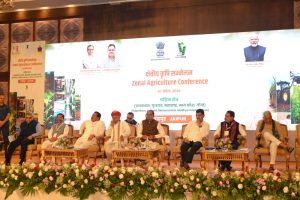
On this occasion, Union Minister of State for Agriculture and Farmers Welfare Bhagirath Choudhary, Rajasthan Agriculture Minister Dr. Kirori Lal, Madhya Pradesh Farmers Welfare and Agricultural Development Minister Aidal Singh Kansana, Gujarat Agriculture Minister Ramesh Bhai Katara, Maharashtra Agriculture Minister Dattatreya Vithoba Bharne, Goa Social Welfare Minister Subhash Uttam Phal Desai, Rajasthan Chief Secretary V. Srinivas, Union Agriculture Secretary Atish Chandra, Director General of the Indian Council of Agricultural Research Dr. M.L. Jat, officials from the Centre and all five states, agricultural experts, and a large number of farmers were present.

Author: thestateview
“The State View” में आपका स्वागत है! www.thestateview.com भारत का एक अग्रणी और सत्यप्रिय समाचार पोर्टल है, जो अपने पाठकों को सटीक, विश्वसनीय और निष्पक्ष समाचार प्रदान करने के लिए प्रतिबद्ध है। हम आपको हर क्षेत्र में, चाहे वह धर्म, राजनीति, अपराध, खेल, विज्ञान, तकनीक, मनोरंजन, स्वास्थ्य या अन्य महत्वपूर्ण घटनाएँ हों, नवीनतम अपडेट्स और तथ्यपूर्ण रिपोर्ट्स प्रदान करते हैं। हमारा उद्देश्य