





Aquatic Frolics Continue Even in the Drying Reservoir:Dr. Kamlesh Sharma
The State View Sunil Sharma
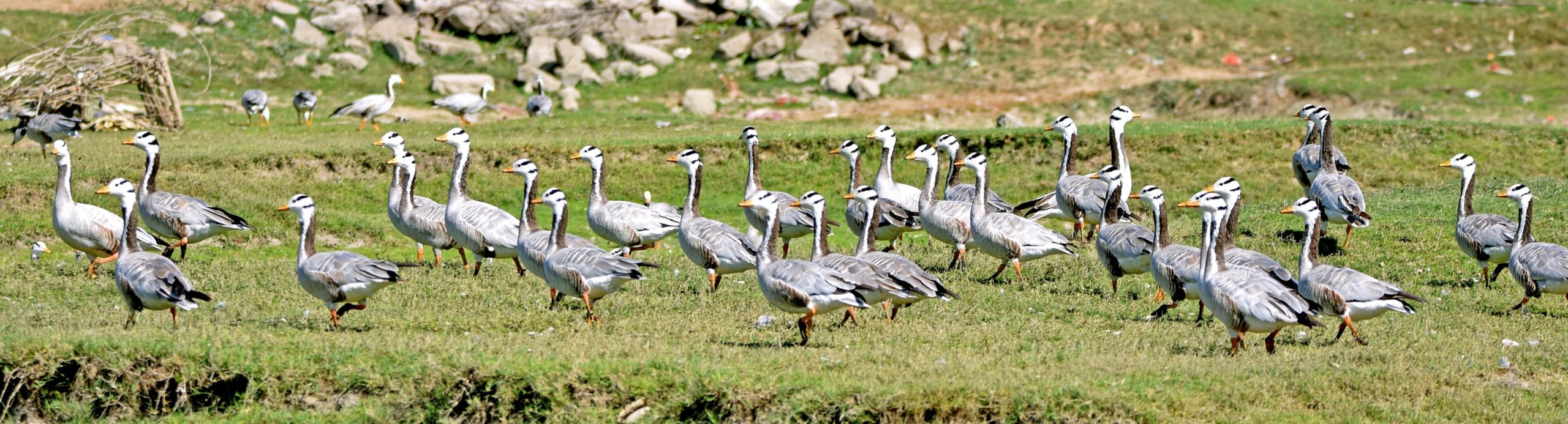
Jaipur। With the passing of winter, the departure of migratory birds from Rajasthan’s lakes and ponds is nearly complete; however, the pond in Borkheda village—located in the Chaksu region near Jaipur—is currently telling a unique story of its own. The Bar-Headed Goose—a migratory bird species typically found in Ladakh, Mongolia, and the Tibetan Plateau, which crosses the high Himalayas to migrate toward South Asia during the winter—has set up camp near Jaipur. Not just in ones or twos, but in numbers exceeding 500, three large flocks of these Bar-Headed Geese have become a focal point of attraction for bird enthusiasts.
*Capable of Flying Up to 1,600 km in a Single Day:*
Known locally as *Rajhans*, the Bar-Headed Goose is counted among the highest-flying birds in the world. These birds are capable of soaring to altitudes of 12,000 to 14,000 feet and can cover distances of approximately 1,600 kilometers daily without stopping. A specialized type of hemoglobin found in their bodies aids in absorbing higher levels of oxygen even in low-oxygen environments, thereby enabling them to successfully cross the high mountain passes of the Himalayas.
*Pond Dries Up, Yet Vegetation Proves Welcoming:*
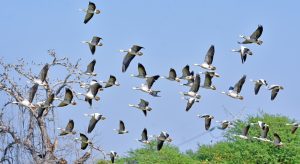
While the majority of the Borkheda pond has dried up, the water remaining in five distinct pockets currently serves as a sanctuary for these trans-Himalayan guests. Amidst the drying reservoir, flocks comprising hundreds of Bar-Headed Geese remain active throughout the day within the small, surviving streams of water. These birds can be observed swimming, flying, and engaging in playful aquatic antics alongside the local waterfowl. At times, they are seen gliding across the calm waters; at others, they suddenly take flight into the sky in a massive flock. These activities—interspersed with the movements of local birds—infuse the tranquil atmosphere of the pond with life, offering a rare glimpse into the wonders of nature.
*Why Have They Lingered?*
Explaining the presence of such a large number of these birds here, environmental scientist and retired forest officer Dr. Satish Kumar Sharma notes that the region is currently experiencing fluctuating temperatures. Given this context, the birds may have chosen to stay on, finding the reduced human activity and the safe, favorable environment to their liking. Alternatively, it is plausible that an initial flock had already settled here; subsequently, another flock arriving from a nearby pond, upon spotting the first group, decided to make a stopover here as well. Dr. Sharma further explained that the Bar-headed Goose is a strictly herbivorous bird. The aquatic vegetation available at the site—combined with the soft grasses and other forage in the surrounding areas, the open and secure terrain, and the relatively peaceful atmosphere—are providing favorable conditions for these migratory birds to extend their stay for a while longer.
*Fact File: Bar-headed Goose*
**Identification:** Two black bands on a white head; grey body
**Length:** Approximately 75 cm
**Weight:** 1.8 to 3 kilograms
**Diet:** Aquatic plants, grasses, occasionally small aquatic organisms
**Clutch Size:** 4–6 eggs
**Flight Altitude:** Up to 12,000–14,000 feet
**Daily Migration Distance:** Approximately 1600 km

Author: thestateview
“The State View” में आपका स्वागत है! www.thestateview.com भारत का एक अग्रणी और सत्यप्रिय समाचार पोर्टल है, जो अपने पाठकों को सटीक, विश्वसनीय और निष्पक्ष समाचार प्रदान करने के लिए प्रतिबद्ध है। हम आपको हर क्षेत्र में, चाहे वह धर्म, राजनीति, अपराध, खेल, विज्ञान, तकनीक, मनोरंजन, स्वास्थ्य या अन्य महत्वपूर्ण घटनाएँ हों, नवीनतम अपडेट्स और तथ्यपूर्ण रिपोर्ट्स प्रदान करते हैं। हमारा उद्देश्य